Does Roof Rejuvenation Work?
What the lab testing shows, who it helps, and the roofs it can't save.
Last updated: August 2026
Yes, for the right roof. Independent ASTM lab testing found that bio-based rejuvenation restores flexibility to aging asphalt shingles and reduced granule loss by approximately 53% on 15-year-old shingles. What lab testing cannot prove is an exact number of added years in the field, so we put our commitment in writing instead: each treatment carries a 5-year transferable warranty, and with re-treatment every five years many qualifying roofs gain 10-15 years of added service life. It works on roofs that are aging but still intact. It cannot save a roof that has already failed.
What does the lab testing actually show?
Independent ASTM lab testing by PRI Asphalt Technologies found that bio-based rejuvenation restored shingle flexibility. Treated shingles passed an ASTM bend test that untreated shingles failed. And reduced granule loss by about 53% on 15-year-old shingles. Permeability and flexibility both improved after treatment.
Here is the part most companies skip: that was laboratory testing. It measured real, physical changes in the shingles, but it did not measure how many extra years a roof gains in the real world. There is no long-term independent field study proving a specific number of added years. We'd rather say that than quote a number we can't back up.
Why does rejuvenation restore shingles at all?
Asphalt shingles fail because they dry out. The asphalt is held together by oils, and years of sun, heat, and freeze-thaw cycles bake those oils out. A dried-out shingle turns stiff and brittle and starts shedding the granules that shield it from UV and rain. Our spray-applied, 95% USDA-certified bio-based oil penetrates the shingle and re-saturates the asphalt, restoring flexibility so it behaves more like a newer shingle. That's the change the lab testing confirmed.
Which roofs does it work on?
Best for asphalt shingle roofs roughly 6–20 years old that are aging but not physically damaged. Good signs your roof is a candidate:
- Asphalt (composition) shingles. Not metal, tile, slate, or flat roofing
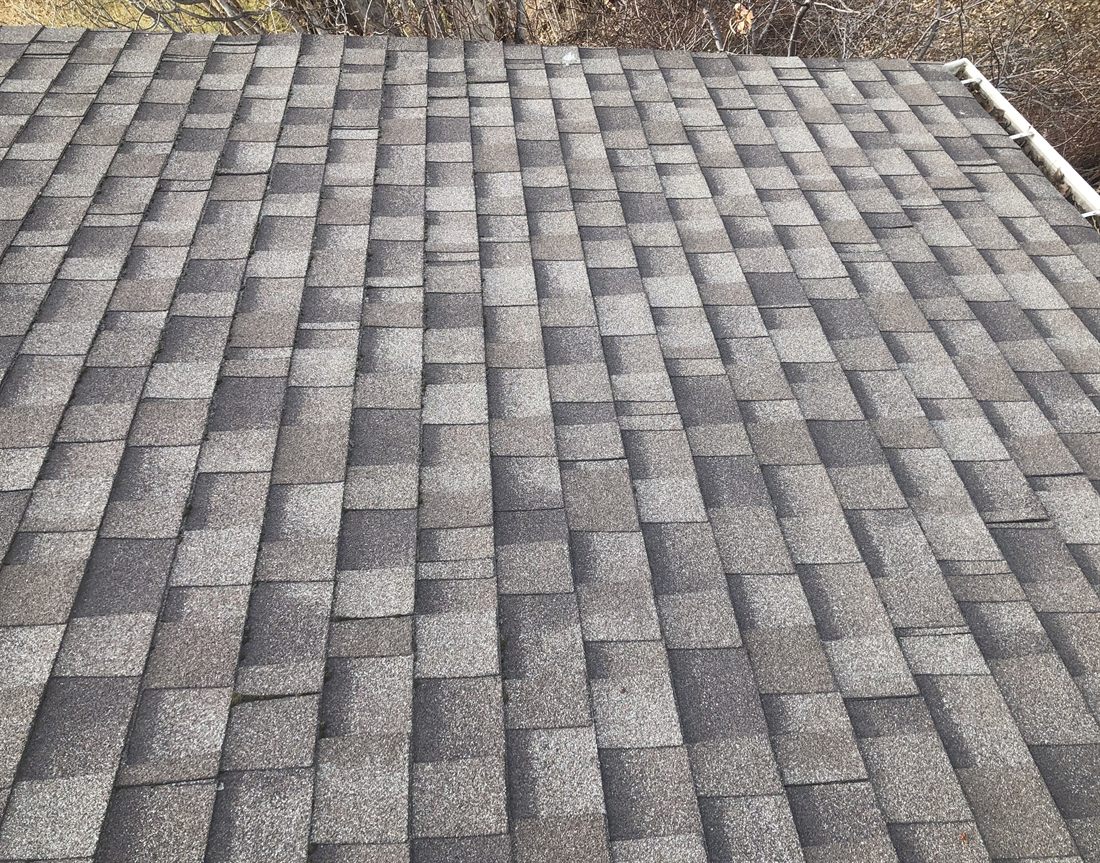
- Dry, faded, or shedding granules, but the shingles are still all there
- No active leaks; shingles are present and not cracked or curling badly
- Structurally sound decking underneath
What can't rejuvenation do?
This is where clarity matters most. Rejuvenation restores aging shingles; it is not a repair.
- It does not fix leaks or stop water that's already getting in
- It does not repair or replace flashing
- It does not replace missing, cracked, or badly curled shingles
- It cannot rescue a roof that has already failed or reached the end of its service life
If that describes your roof, rejuvenation is the wrong tool. And we'll tell you so during the inspection instead of selling you a treatment that won't help. See our full take on rejuvenation vs. replacement.
So how do I know if it will work on MY roof?
You get a free on-roof inspection. We check flexibility, granule loss, flashing, and any leaks, then give you a clear answer. If it's a fit, you'll also want the numbers on our cost page (rejuvenation typically runs 80-85% less than a full replacement) and our take on whether it's worth it.
Find out if it will work on your roof
A free inspection is the only way to know for sure. We'll tell you whether rejuvenation or replacement makes more sense.